B-botz
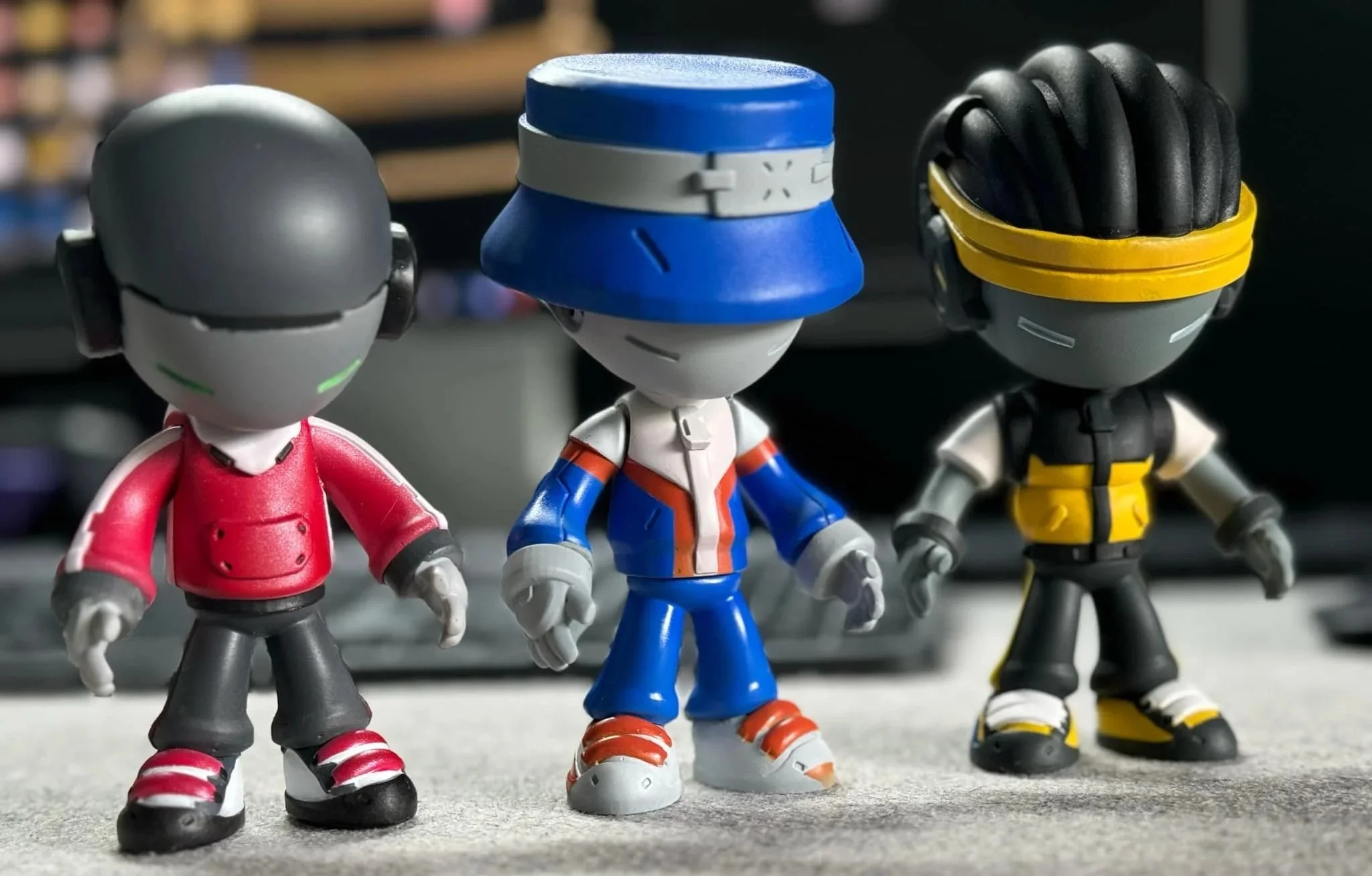
Three Breaking Robots, from screen to streets.
Bbotz started with a question I couldn't answer from my desk: would a character I designed on screen survive being made real?
So I made three. A small cast of miniature robots built out of hip-hop and bboy culture and the blind-box figures I collect — designed, sculpted, printed, sanded and hand-painted end to end.
Role-Character design, 3D sculpt, print, paint, branding
Year-2025
One silhouette, three personalities.
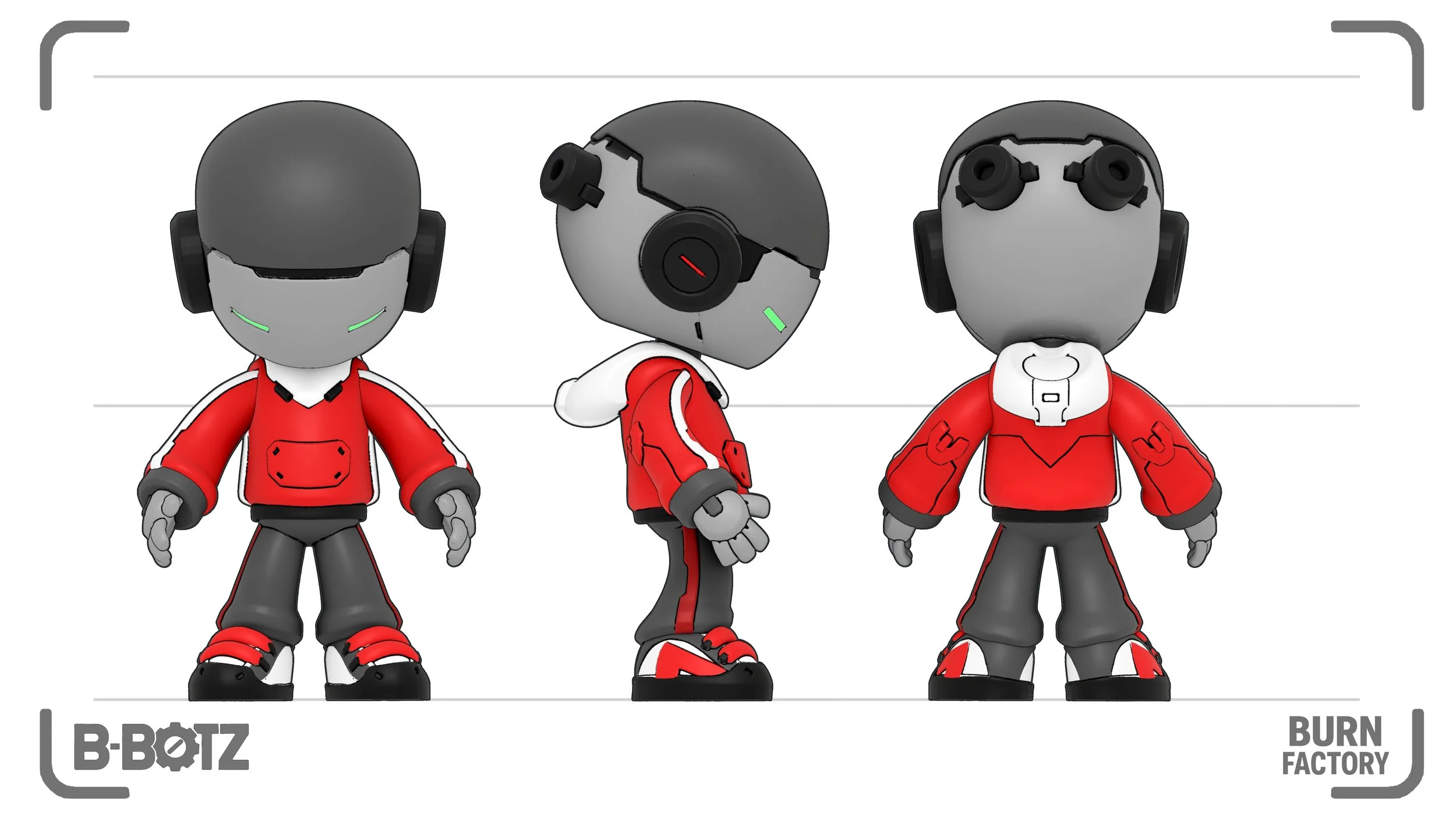
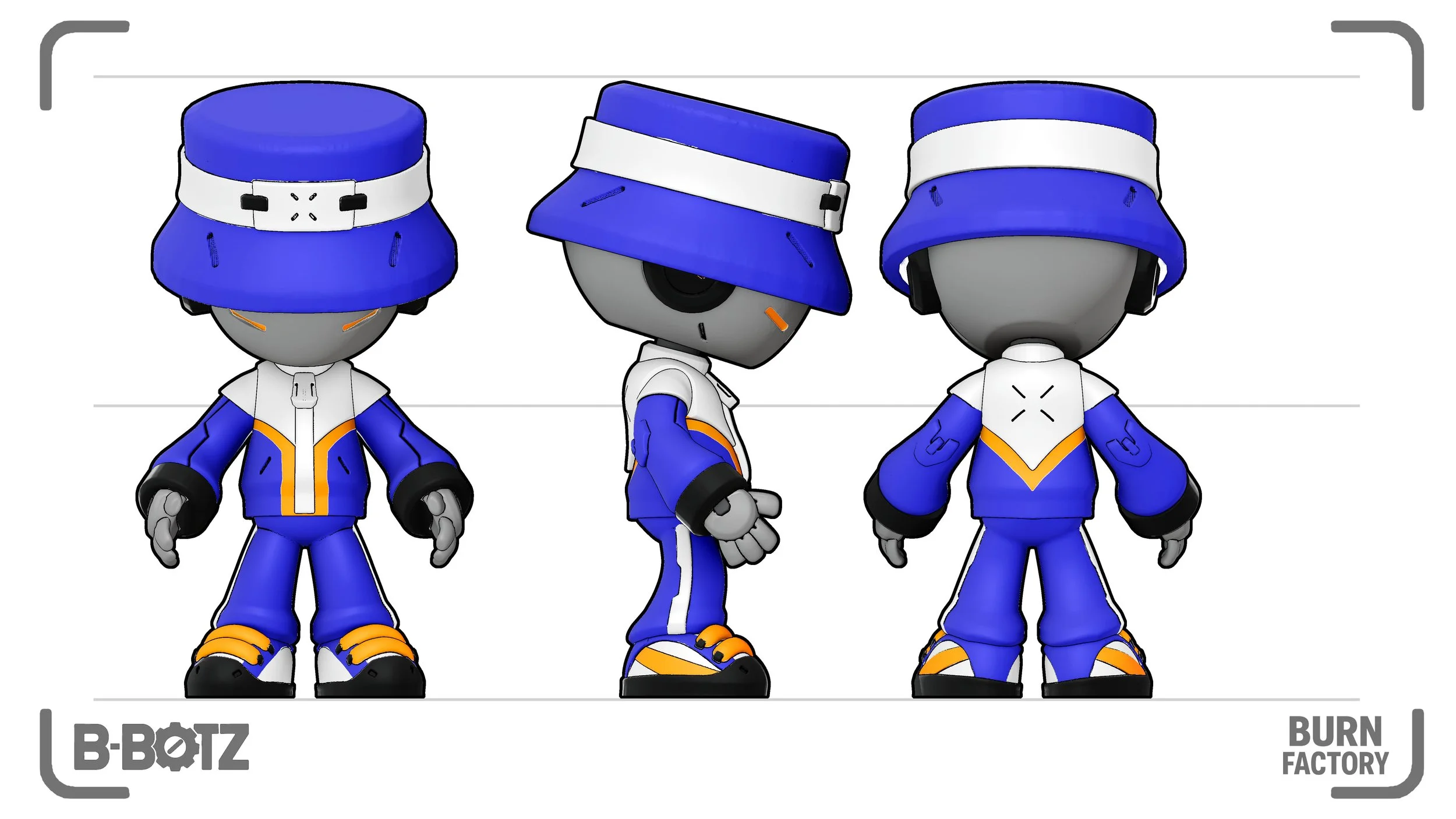
What the cast shares is a build, not a costume: a rounded robotic head, compact proportions, visible joints, sneakers two sizes too big. That's the constant. It's why they read as one family from across a room even though no two of them are wearing the same thing.
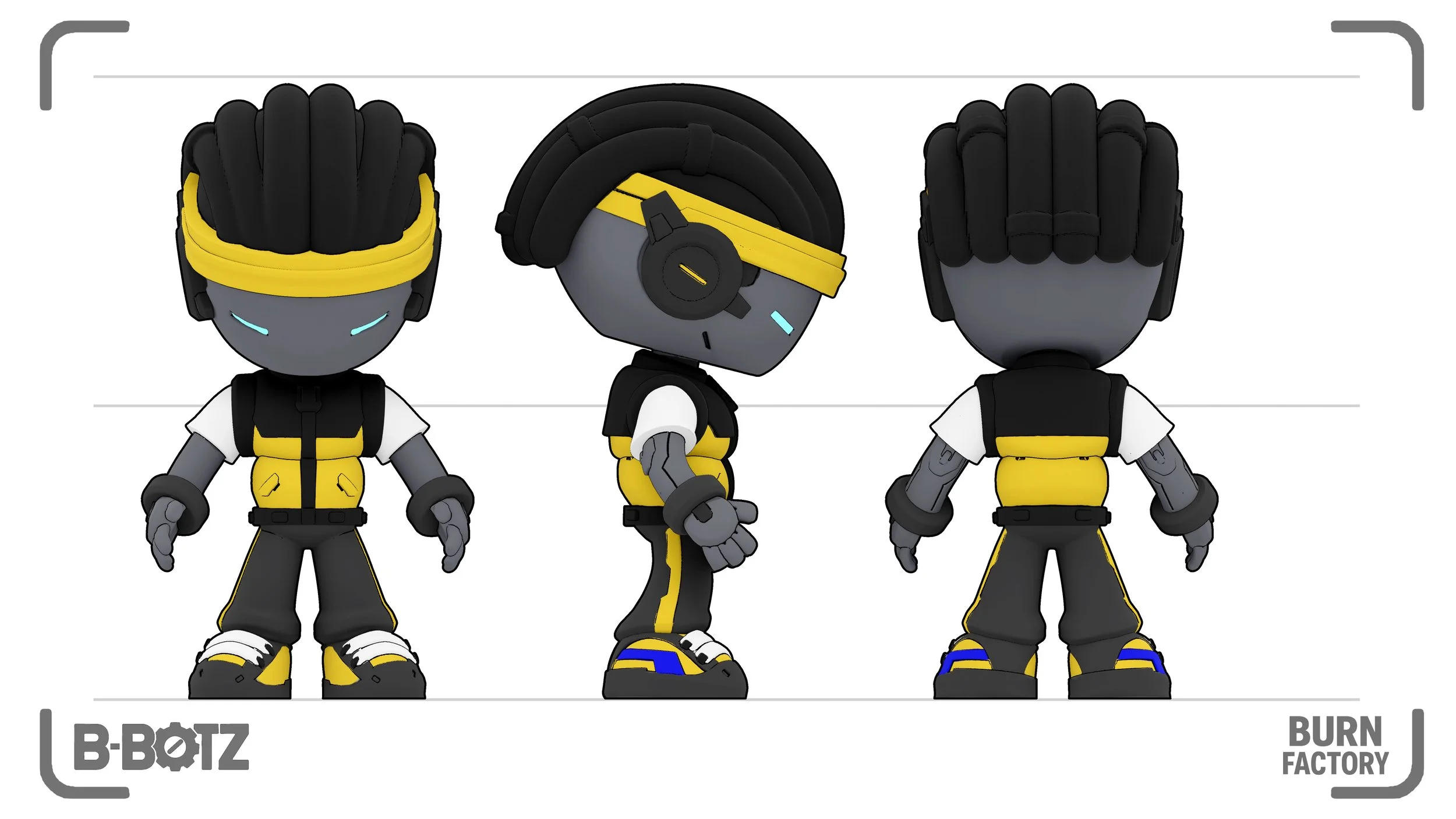
Everything else changes. A hoodie, a full track suit, a vest over layered sleeves — the clothing shifts each figure's outline enough that you can name them in shadow, and the headwear pushes it further. A bucket hat, a headband over sculpted hair, a bare dome with headphones clamped to it. Each character owns a colour and never borrows another, so even at thumbnail size — which is how most people meet a toy — nobody gets mistaken for anybody else.
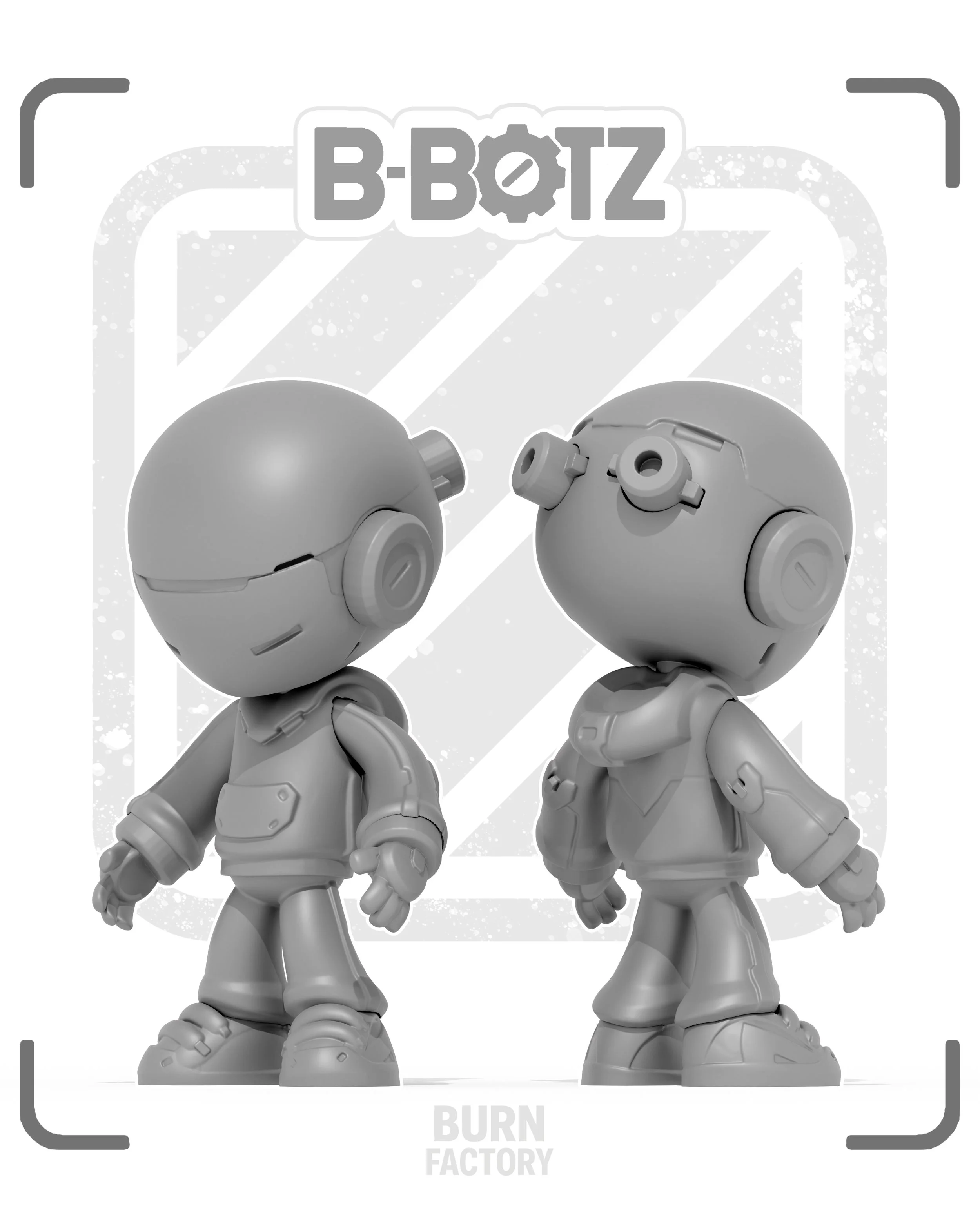
Making the design work in physical world
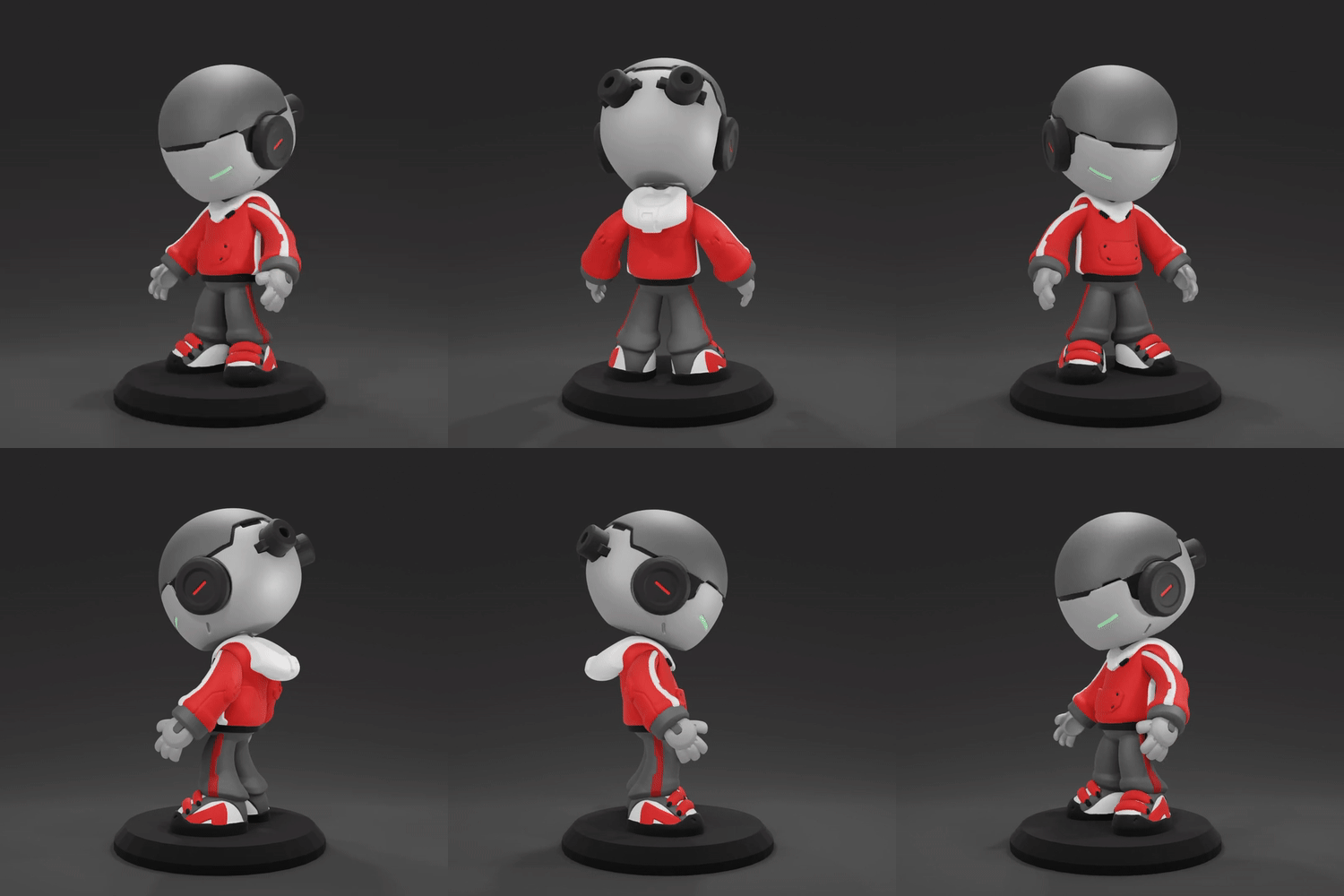
Game characters live in a world with weight and gravity — I've always designed for that. But it's a world I control. Nothing I make has to survive being manufactured, and detail is effectively free: if a strap reads on screen, it exists.
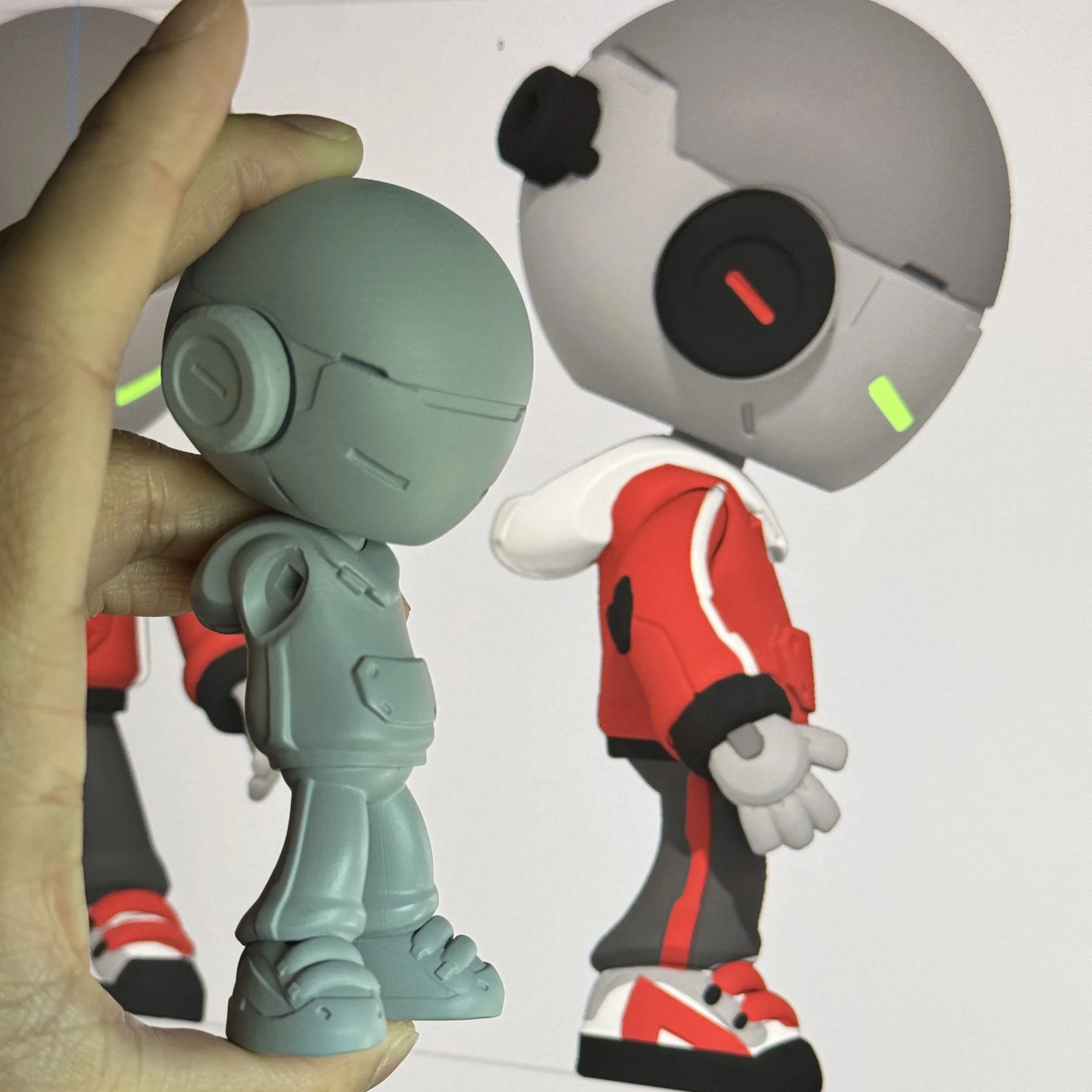
A toy doesn't get that. The first passes wouldn't stand up — the pose looked settled in the render and then tipped the moment it was a real object with a heavy head on small feet. Other parts failed the other way: details I'd sculpted because they were sharp in a viewport came off the printer thin enough to snap under a fingernail.
So it became a loop. Sculpt, print, watch it fall over or break, change the design. Widen the sneakers until the foot could actually carry the figure, thicken anything too fine to handle, cut the detail that only ever existed for the camera. It took far more passes than I expected, and the design that came out the other end isn't the one I drew.
Printed in pieces, finished by hand
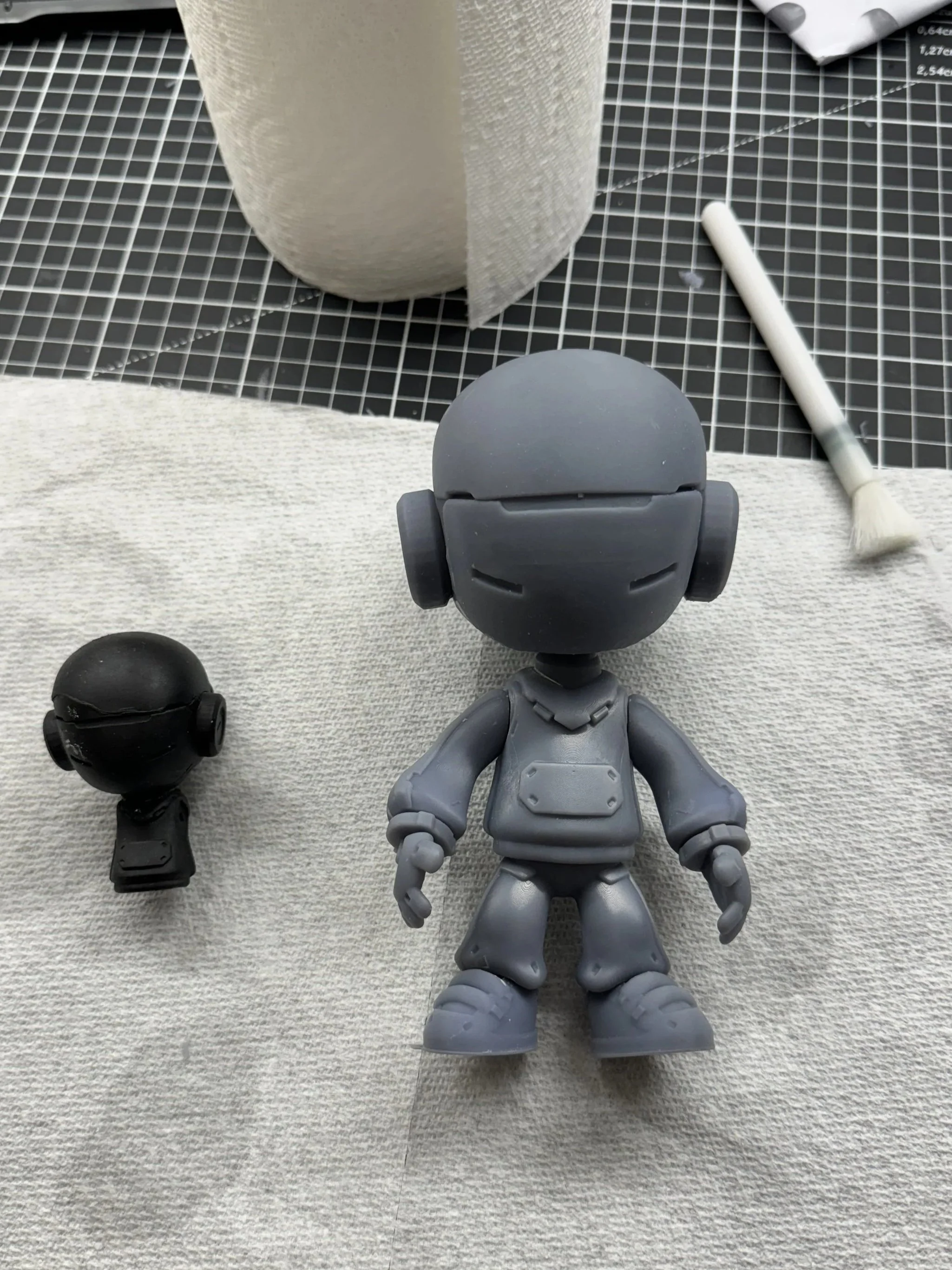
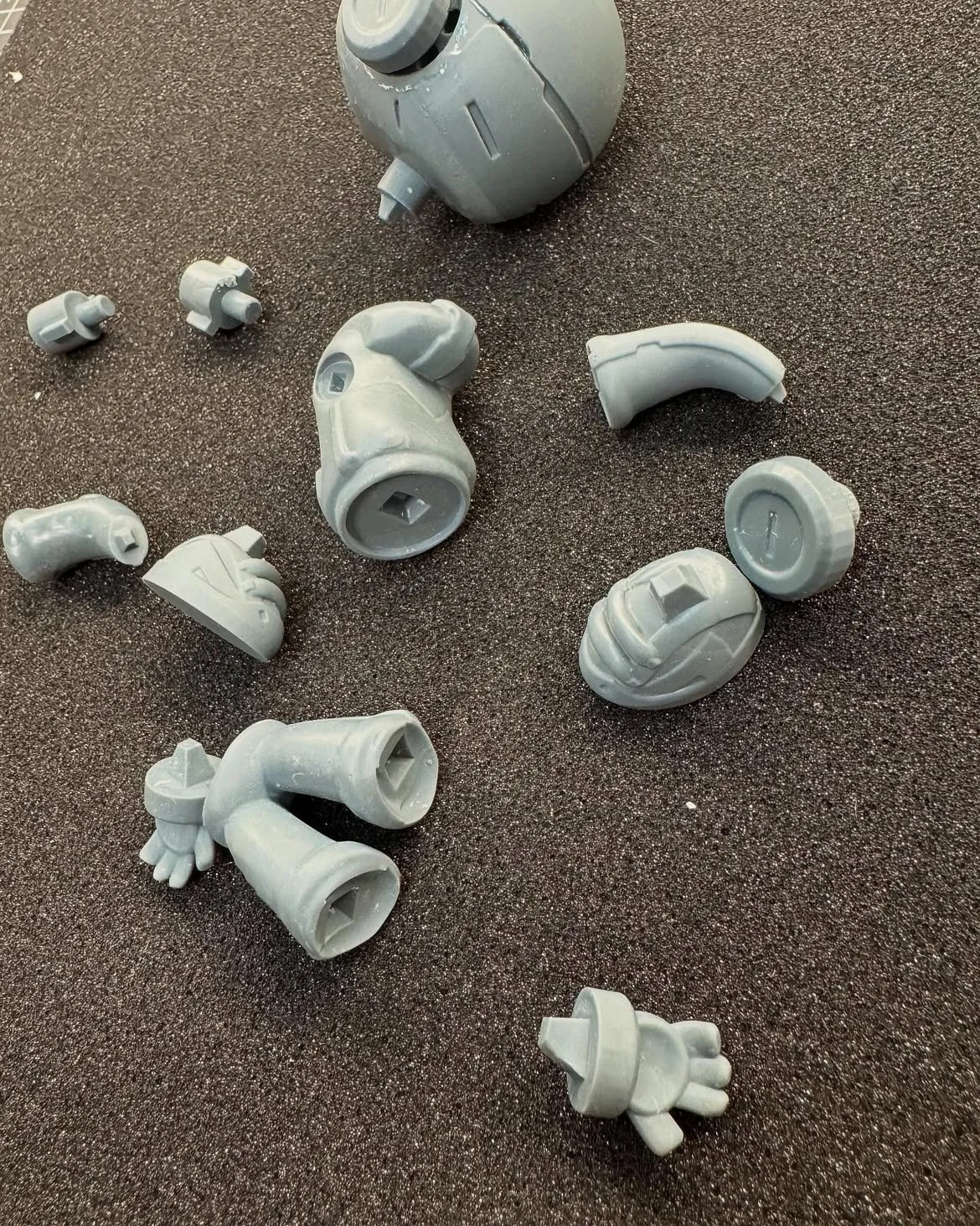
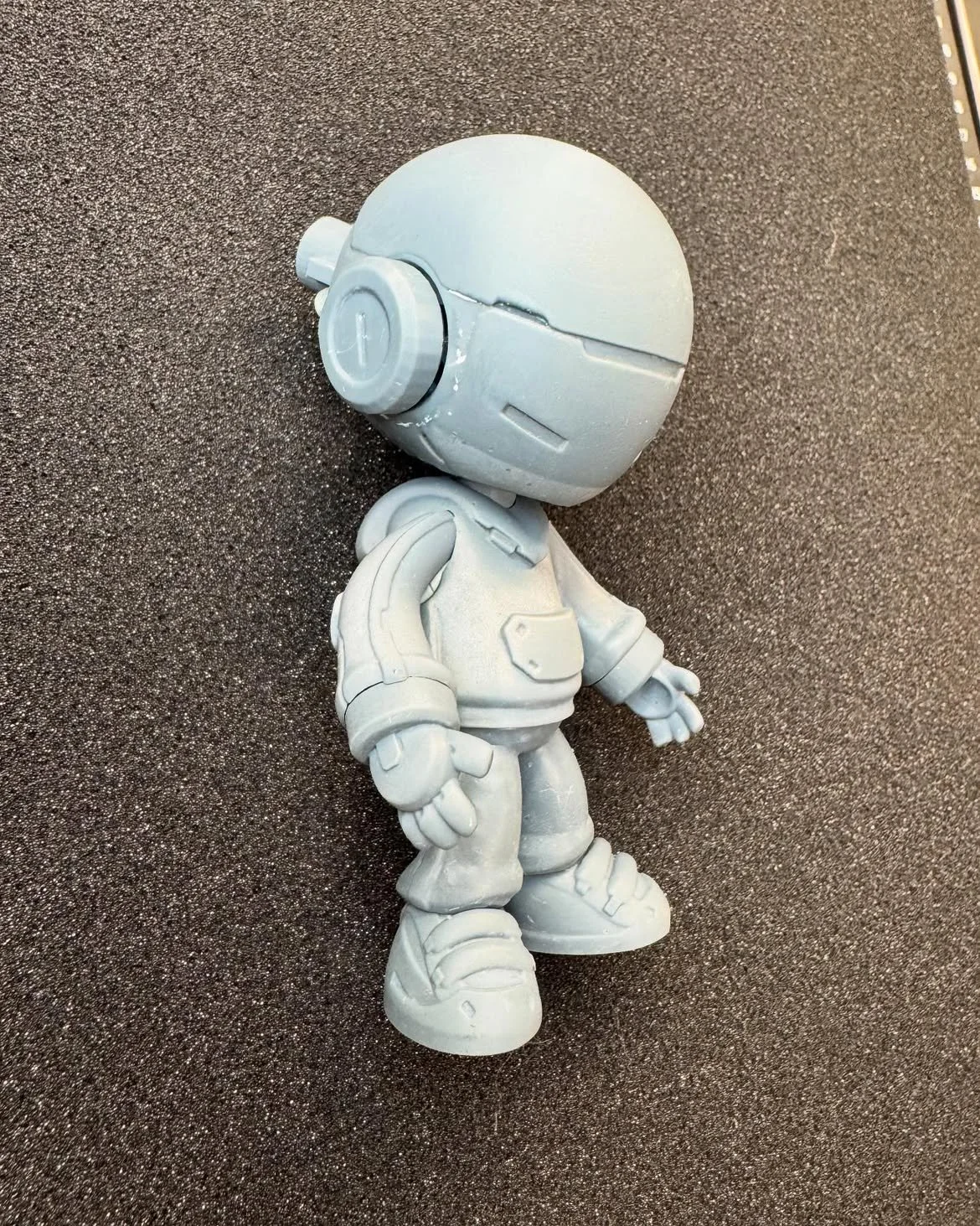

Each figure comes off the plate in parts — head, torso, limbs, hands, sneakers, headwear. Every one gets sanded down, primed, painted and dry-fitted before anything is glued. Where the pieces split isn't arbitrary — the seams sit where the design already had an edge, so the join disappears into the sneaker line or the hem of a jacket.
Printing and Prep Work
Video process work of Bbotz figure.
Fresh Paint and Assembly
The Finished Product
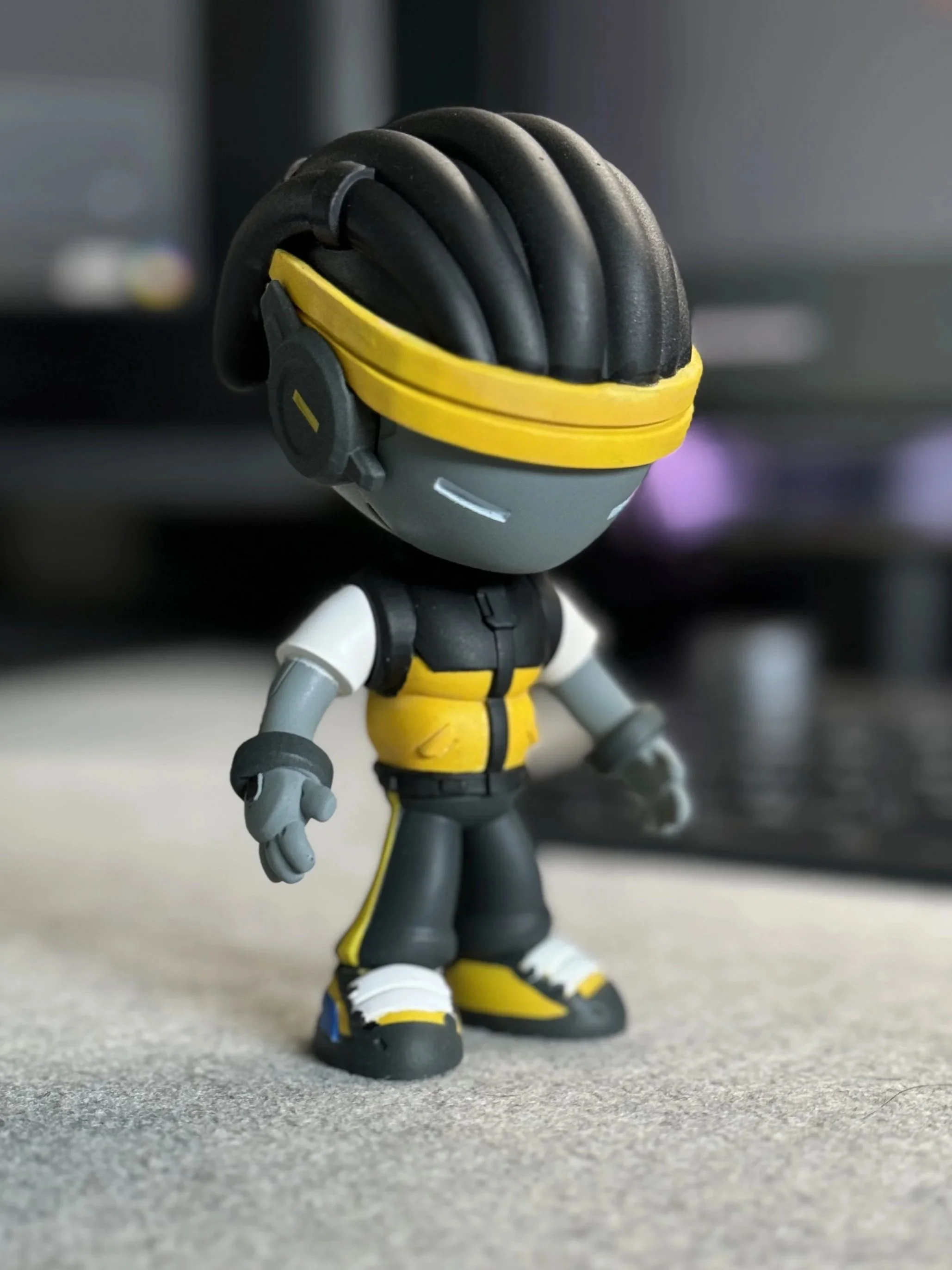
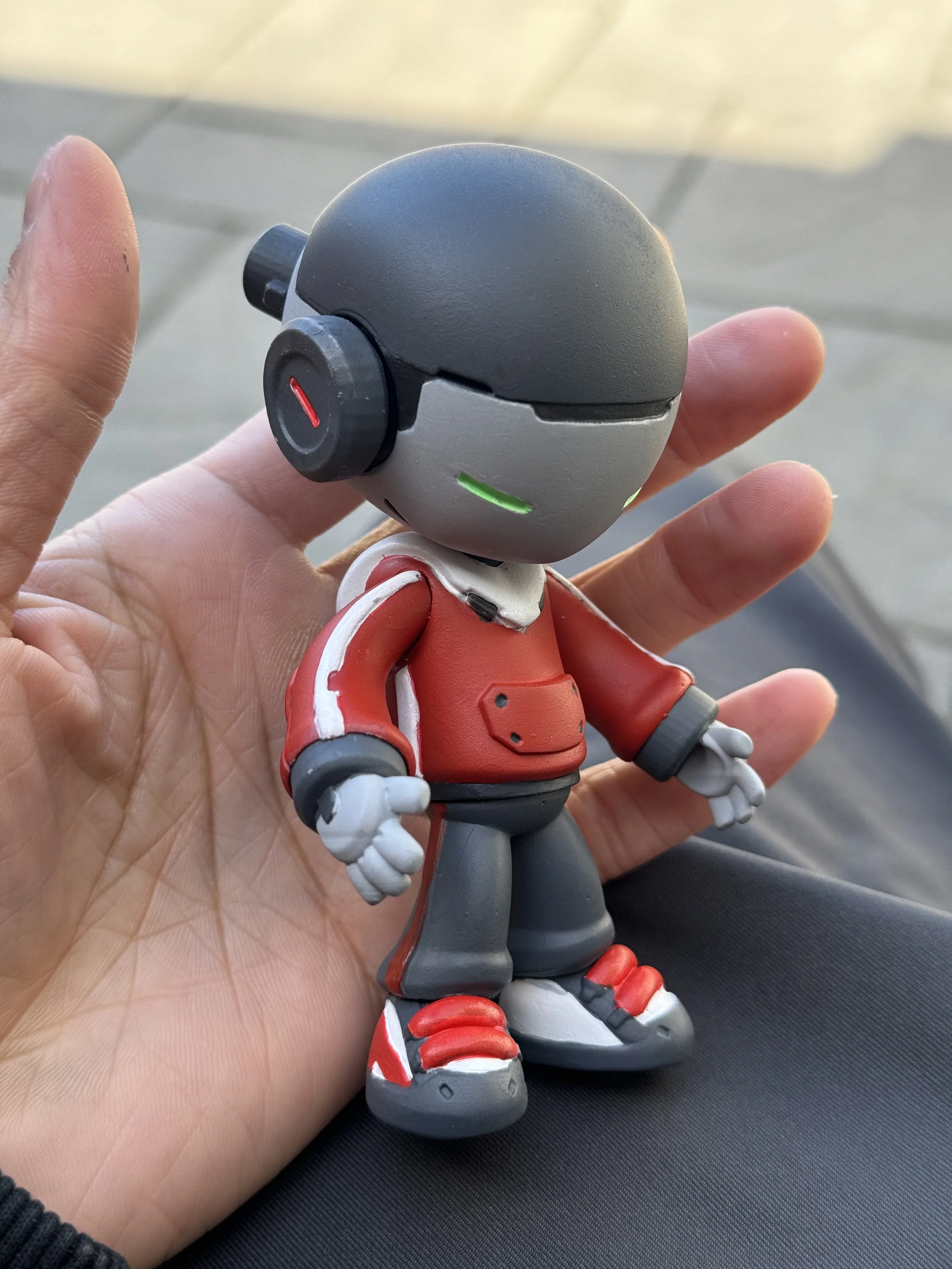
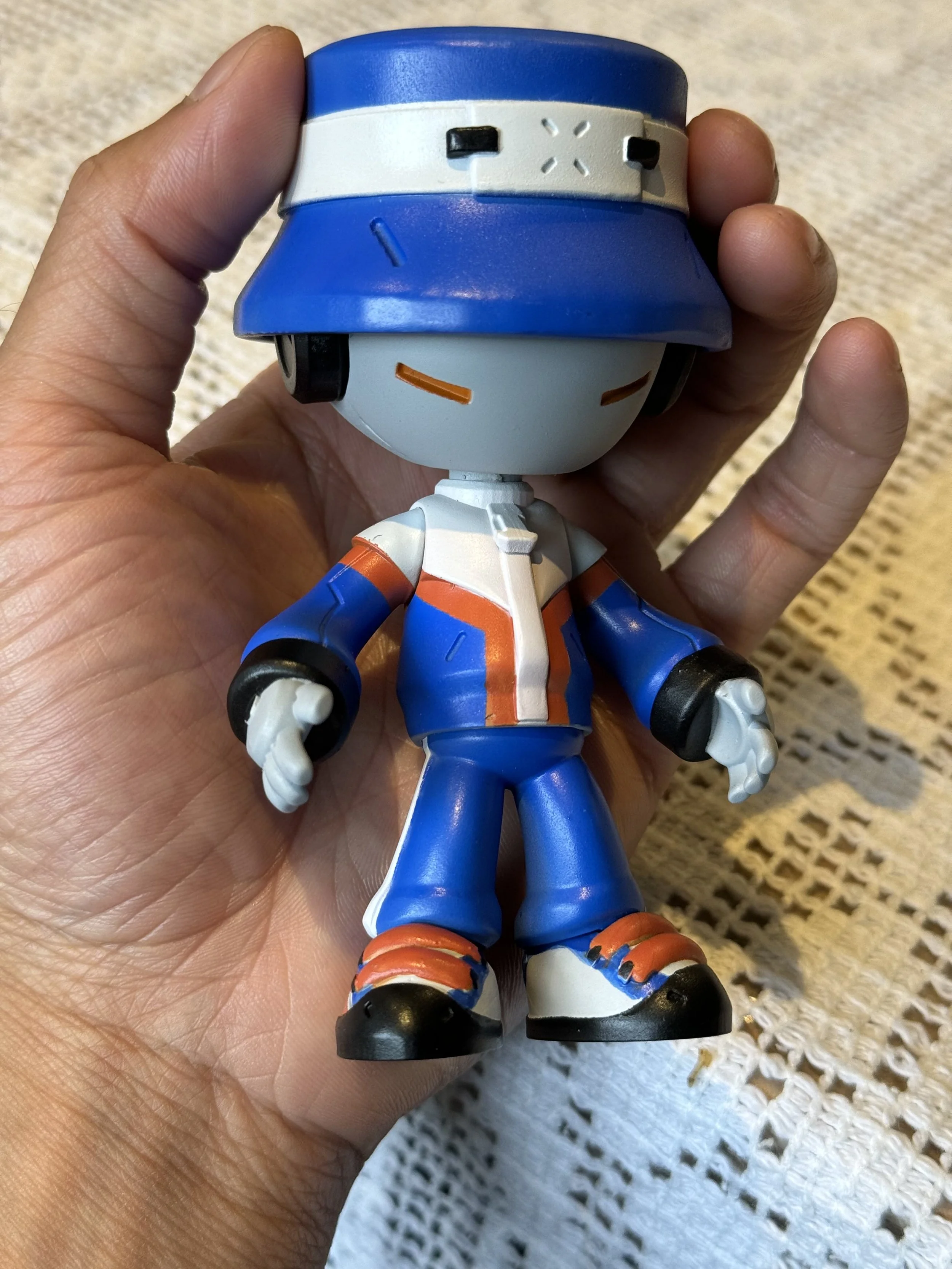
Bbotz pulled my character work off the screen. Moving between 2D, sculpt and a physical build forced me to hold a character's identity steady while every one of its forms changed to suit a real object — and that instinct followed me straight back into game art.